
 Article réservé aux abonnés
L'Allemagne se donne 19 ans pour sortir du charbon, mais combien cela lui coûtera-t-il?
Une commission propose de fermer la dernière centrale au charbon en 2038. 40 milliards seront investis en compensation dans les régions minières. Le remplacement de cet approvisionnement reste un défi.
- Publié le 03-02-2019 à 15h16

Une commission propose de fermer la dernière centrale au charbon en 2038. 40 milliards seront investis en compensation dans les régions minières. Le remplacement de cet approvisionnement reste un défi. Ils étaient beaucoup moins nombreux qu'à Bruxelles mais ils étaient quand même près de 10 000 élèves à braver le froid devant le ministère allemand de l'Économie, le 25 janvier dernier, pour demander au gouvernement de s'engager davantage pour le climat.
Le timing était parfait puisque l'avenir de la filière charbon allemande se jouait ce jour-là. Après des mois de négociation et un dernier marathon nocturne, les membres de la "commission charbon" se mettaient enfin d'accord pour l'arrêt progressif des centrales à charbon entre 2022 et 2038. Avec une longue série de propositions pour atténuer le choc social et économique.
Le gouvernement allemand va maintenant transformer ces propositions en projet de loi d'ici mai, a annoncé la chancelière Angela Merkel jeudi soir, à l'issue d'une rencontre avec les présidents des quatre régions minières allemandes.
Avec une grande question : combien le gouvernement est-il prêt à mettre sur la table pour accompagner le mouvement ? La commission charbon suggérait 40 milliards d'euros pour la reconversion des régions minières et 2 milliards pour compenser la hausse des prix de l'électricité pour les consommateurs. Sommes auxquelles s'ajoutera l'indemnisation des exploitants, qui se compte là aussi en milliards. Le ministre des Finances, Olaf Scholz, a jugé cette somme "plausible" dans une interview au quotidien économique Handelsblatt, mais dans les limites du budget actuel seulement.
Enjeux environnementaux, économiques et politiques
Une équation complexe à résoudre d'ici mai, alors que les enjeux s'entrechoquent. Ils sont environnementaux, avec la perspective de réduire drastiquement les émissions de dioxyde de carbone. Mais aussi économiques car si la part des énergies renouvelables représente aujourd'hui 38 % de la consommation nette d'électricité, 38 % de celle-ci provient toujours du charbon. Sans oublier les conséquences sociales avec quelque 20 000 emplois concernés.
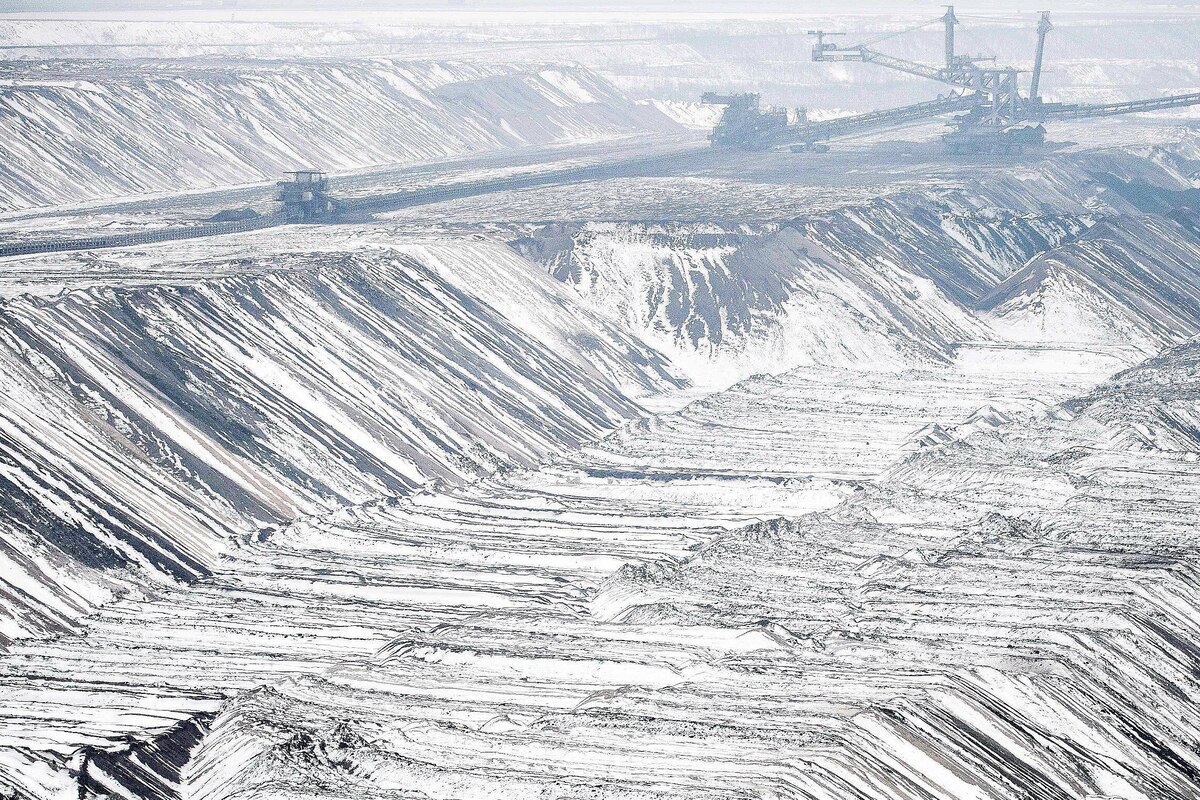
Les débats sont surtout très politiques : c'est en grande partie à l'est du pays que le lignite est arraché des entrailles de la terre par les "Boden-Bagger", ces gigantesques pelleteuses qui creusent jour et nuit les mines à ciel ouvert. Dans cette partie de l'ancienne Allemagne communiste, l'extrême droite creuse, elle aussi, le terrain. À huit mois des élections régionales de septembre 2019, l'AfD est crédité de 20 % des intentions de vote dans le Brandenburg et de 25 % en Saxe.
La fin du charbon en 2038
Pas étonnant dans ce contexte que les 28 membres de la "commission charbon", représentant des entreprises, ONG environnementales, syndicats ou chercheurs, aient mis sept mois à accorder leurs violons. Le résultat est un calendrier assez flexible. La dernière mine devra fermer au plus tard en 2038, soit huit ans après la date préconisée par les organisations environnementales mais jusqu'à vingt ans avant la fin des concessions actuelles. Rendez-vous est pris pour vérifier en 2032 si la sortie complète du charbon ne peut pas être avancée à 2035. Le plus gros effort devra être fourni d'ici à 2022.
Les premières mines en ligne de mire sont celles de lignite, cette roche à mi-chemin entre la tourbe et la houille dont la combustion est particulièrement polluante. Les écologistes peuvent se vanter d'une victoire symbolique : à l'ouest de l'Allemagne, la mine de Hambach entre Aix-la-Chapelle et Cologne ne devrait pas être étendue, épargnant la forêt et ses arbres multicentenaires défendus par les militants écologistes depuis des mois.
En Lusace aussi, près de la frontière polonaise à l'Est, des villages qui luttent depuis plus de dix ans pour ne pas être engloutis par les mines devraient respirer. Pour les quelque 8 000 mineurs de Lusace en revanche, l'inquiétude est tangible dans cette région déjà très ébranlée par la chute du mur de Berlin il y a trente ans.
Le plan de la commission charbon leur promet, à eux et aux gueules noires de la Ruhr ou de Saxe, un accompagnement à coûts d'investissements. Réseaux ferroviaires, installation d'administrations ou de centres de recherche… Ou même pistes cyclables et piscines : l'inventaire des 600 projets proposés ratisse large. Trop, aux yeux de Joachim Ragnitz, de l'institut de recherche économique Ifo à Dresde. Pour lui, "si les recommandations de la Commission étaient adoptées telles quelles, beaucoup d'argent serait finalement investi dans des dépenses illusoires".
Réussir sa sortie
La question des approvisionnements reste elle aussi dans le vague. La sortie allemande du charbon va être "au moins partiellement compensée par des importations d'énergie nucléaire et issue du charbon en provenance de Pologne et de République tchèque", fait valoir Karen Pittel, de l'Ifo à Berlin. Autrement dit : "Les émissions allemandes risquent de diminuer, mais celles du reste de l'Europe augmenteront."
Claudia Kemfert, de l'institut d'économie de Berlin préconise une solution pour rendre les énergies renouvelables compétitives : diminuer les quotas d'émission de CO2 et augmenter le coût des certificats disponibles pour les entreprises, ce qui rendra le kW polluant plus cher. C'est la solution adoptée par le Royaume-Uni pour réussir sa sortie du charbon en quatre ans.
Plus de renouvelables mais toujours trop de CO2
Moins de charbon, c'est plus de renouvelables et moins de CO2 ? L'équation est probable mais reste à démontrer. Avant même de programmer la fin de ses centrales au charbon à l'horizon 2038, l'Allemagne avait déjà fort à faire avec sa sortie du nucléaire. Ébranlé par la catastrophe de Fukushima au Japon en 2011, le gouvernement Merkel avait alors décidé l'arrêt des centrales nucléaires nationales pour 2022. Depuis, huit des seize réacteurs que comptait le pays ont déjà fermé. Le nucléaire ne représente plus que 13,3 % du mix énergétique allemand.
Renfort des centrales au charbon
Les sources d'énergie ont donc baissé mais pas sa consommation dans une Allemagne en pleine reprise économique. L'objectif du gouvernement était initialement de réduire la consommation d'énergie primaire de 20 % entre 2008 et 2020. Ce sera 11 %, a reconnu le ministère de l'Économie et de l'Énergie cet été.
Les centrales au charbon ont donc été appelées à la rescousse. La fermeture de 34 vieilles centrales à charbon entre 2011 et 2015 a été compensée par l'ouverture de onze unités plus performantes, celles-là même dont la fermeture prochaine pose question dans les régions concernées. Le charbon et le lignite assurent actuellement 38 % de la production d'électricité du pays.
En deçà des ambitions
L'Allemagne a réussi à réduire ses émissions de gaz à effet de serre de 27 % au total depuis 1990 mais le rythme de cette baisse a ralenti, se stabilisant autour de 2 % depuis 2012. La faute aux transports et à la reprise économique. Si les émissions de CO2 n'ont pas augmenté comme le prédisaient les partisans du nucléaire, le pays reste en deçà de ses ambitions qui visaient une réduction de ses émissions de 40 % en 2020 par rapport à 1990, 60 % en 2030 et 80 % en 2050. L'Allemagne reste aujourd'hui le plus gros émetteur de CO2 dans l'Union européenne (23 % des émissions). Sept des dix centrales à charbon les plus polluantes d'Europe sont allemandes.
Bonne nouvelle : la part des énergies renouvelables dans le mix énergétique allemand a doublé depuis 2010, selon les chiffres publiés par l'institut de recherche Fraunhofer début janvier. Elles sont passées de 17,1 % à 38,2 % de la consommation allemande nette d'électricité. L'énergie éolienne et les installations photovoltaïques ont couvert l'essentiel de cette production grâce notamment à un été ensoleillé, la bioénergie et l'hydroélectricité.
Et après ?
Ces résultats ont été claironnés par le gouvernement, qui ambitionne de faire porter 65 % de la production totale aux renouvelables en 2030 et faire de l'Allemagne une championne du renouvelable. Jouable ? Les économistes allemands s'écharpent sur le sujet. Pour Hans-Werner Sinns, de l'Institut d'économie Ifo de Munich (proche des chrétiens démocrates), l'expansion de l'énergie éolienne et solaire va rapidement atteindre ses limites, faute de capacité de stockage pour ces énergies fluctuantes au gré des saisons.
Faux, rétorquent les chercheurs de l'institut allemand d'économie DIW à Berlin (plutôt à gauche) dans une analyse publiée en juin 2018. Pour eux, non seulement l'Allemagne n'est pas "une île électrique" et peut donc exporter ses surplus d'énergie, mais ses capacités de stockage locales ne doivent pas être sous-estimées. Ils misent entre autres sur la technique du "power to gas", qui convertirait l'électricité éolienne produite offshore au nord de l'Allemagne en hydrogène ou autre gaz de synthèse plus facile à stocker et transporter. Reste un problème : ce n'est pas vraiment dans cette direction que le plan charbon allemand prévoit d'investir.